


Running a company often feels like a race between opportunity and capacity. New leads arrive faster than internal teams can respond, administrative work piles up and founders find themselves buried in coordination instead of momentum. Many organizations know support is needed; yet traditional hiring can be slow, expensive and difficult to scale when priorities change.
An offshore virtual assistant offers a practical alternative. Instead of adding permanent overhead, businesses gain flexible expertise that adapts to daily operations. The model has matured significantly in recent years, moving beyond basic task handling toward structured partnerships, measurable outcomes and a specialized skill sets.
This guide breaks down how offshore assistance work, what should be delegated, how pricing typically looks and how to evaluate providers. The goal is simple: help decision makers move from the curiosity to confident action with clarity and fewer surprises.
What is an Offshore Virtual Assistant?
An offshore virtual assistant is a remote professional located in another country who supports a company’s operations, administration, marketing, sales or back office workflows. Communication happen through digital tools, shared dashboards and documented processes; allowing collaboration that feels integrated rather than distant.
Unlike traditional employment, engagement is usually flexible. Support can expand during busy seasons and contract when demand stabilizes. This create room for leadership teams to stay focused on growth instead of being tied down by recurring operational chores.
Offshore specialists may work independently or through a managed service providers that handle recruitment, training, supervision and continuity planning. The second model often reduces risk; especially for firms that want reliability without building internal management layers.
Why Businesses Outsource Virtual Assistants?
Pressure on in-house resources is the most common trigger. When highly paid team members spend hours scheduling meetings, updating systems or preparing reports; productivity leaks in quiet but costly ways. Delegating these activities restores focus to strategy, revenue, and innovation.
Another factor is speed. Recruiting locally can take months while remote staffing pipelines are built for rapid matching. Businesses that want to move quickly toward new markets or product initiatives often prefer this agility.
Budget visibility also improves. Instead of absorbing recruitment fees, benefits, workspace, and equipment, companies operate with predictable service costs tied to output and hours.
Common Business Problems Offshore VAs Solve
As companies expand, pressure rarely appears in one dramatic moment. It builds quietly through small delays, unfinished admin and leaders being pulled into work that should be delegated.
- Founder burnout: Leaders often become the default person for every unresolved detail which leaves little room for thinking about direction or an expansion. Consistent operational support removes constant interruptions and help to restore sustainable working rhythms.
- Admin overload: Everyday coordination, paperwork and check-ins can easily take up full days while progress feels minimal. Handing off well defined responsibilities reduce the buildup of pending work and lets internal teams focus on initiatives that create greater impact.
- Missed growth opportunities: When the responses are delayed or systems are outdated, potential revenue slips away without obvious warning signs. Dedicated assistance keeps the pipelines organized and ensure momentum is maintained.
- Hiring costs & delays: Recruitment cycles, onboarding time and employment commitments can slow progress when help is needed immediately. Offshore support provide faster access to capable professionals while maintaining flexibility.
What Are the Benefits of Outsourcing to a Virtual Assistant?
Many businesses wonder if bringing in an offshore virtual assistant is truly worth the investment. The reality is that outsourcing deliver measurable advantages that extend beyond just task completion.
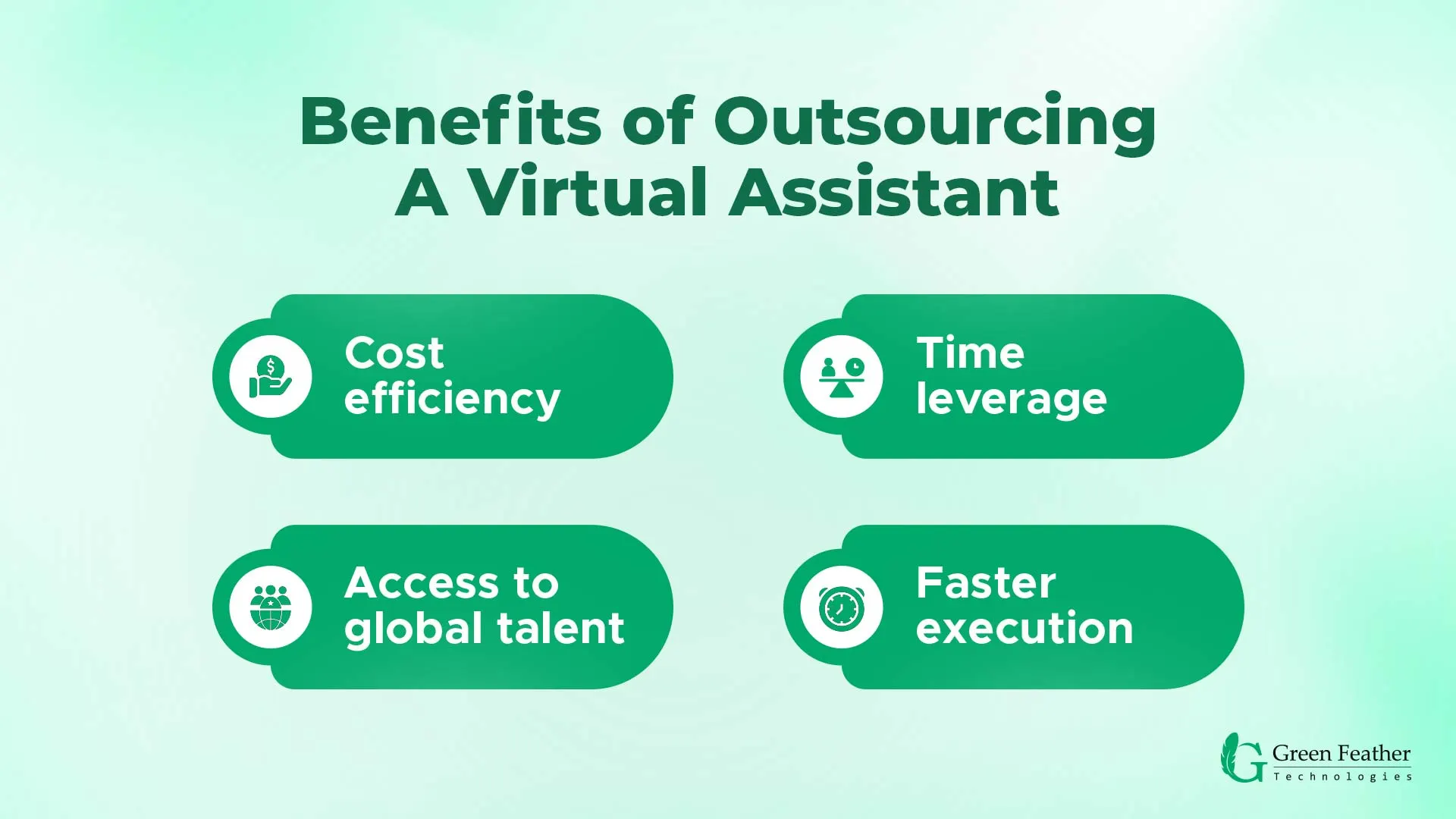
- Cost efficiency: Paying only for the hours actually worked, helps to avoid the fixed expenses of full-time salaries, benefits and office space. This make support predictable and scalable without stretching budgets.
- Time leverage: Delegating repetitive or administrative work frees leaders to focus on strategy, product development and growth initiatives. Every hour saved compounds into higher value results.
- Access to global talent: Offshore VAs often bring expertise across tools, industries and a international workflows. This allow companies to tap into skills that may not be readily available locally.
- Faster execution: Tasks get completed without delay caused by internal bandwidth limits; keeping projects, campaigns and client follow-ups on schedule.
What Tasks Should You Outsource to a Virtual Assistant?
Knowing what to delegate is key to maximizing the impact of an offshore virtual assistant. Work that is repeatable and process driven tends to deliver outcome more quickly while also easing the operational burden on leadership and freeing decision makers to concentrate on higher value priorities.
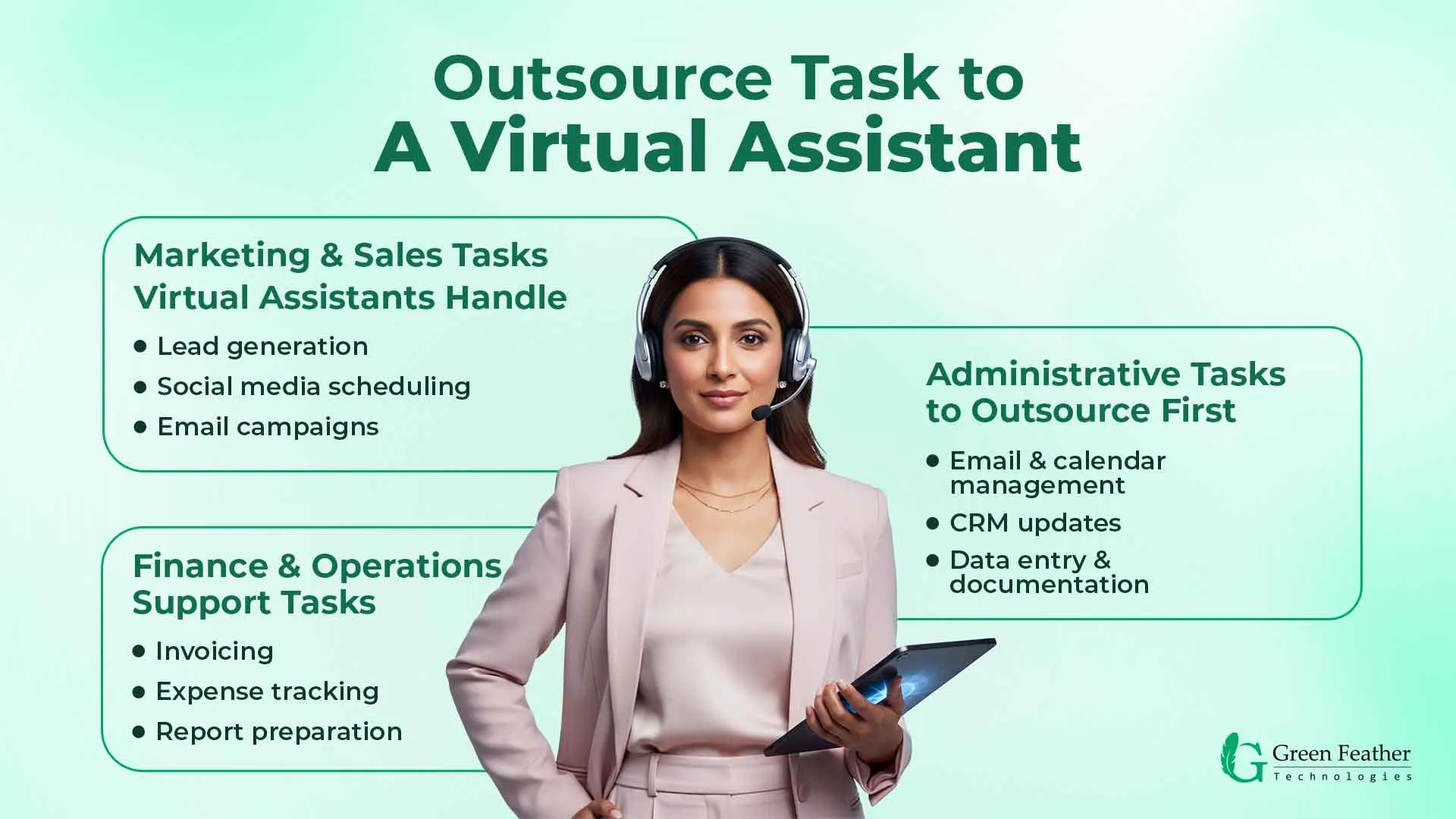
Administrative Tasks to Outsource First
Administrative work can quietly eat up hours every day and it’s often repetitive which is perfect for a virtual assistant offshore to handle. These are the tasks that free you from the busywork so you can focuses on growing your business.
- Email & Calendar Management: Keeping your inbox and schedule organized takes more time than most founders realize. A VA can filter a messages, set reminders and ensures your calendar doesn’t become chaos.
- CRM Updates: Managing customer information, tracking leads and updating notes is critical but tedious. Outsourced virtual assistants can handle CRM maintenance; so your sales process stays smooth.
- Data Entry & Documentation: From spreadsheets to reports, entering and organizing data is repetitive and very time-consuming work. Delegating this to a VA keep everything accurate and consistent without distracting you from strategic work.
These kinds of tasks are low-risk. They don’t require you to give up control, but they immediately free up your schedule. It’s usually the safest starting point.
Marketing & Sales Tasks Virtual Assistants Handle
Virtual assistants aren’t just for administrative work, they can also support marketing and sales efforts, helping your business reach more customers and generate leads without adding extra stress to your team.
- Lead generation: Identifying and validating prospects is time intensive and often pulls attention away from selling. A virtual assistant can build lists and filter opportunities so the sales team can focus on the closing the deal not searching for them.
- Social media scheduling: Keeping a steady posting routine sounds simple until other priorities take over and it slips. A virtual assistant can line up content, reuse existing material and maintain activity while you stay in charge of direction.
- Email Campaigns: Newsletters, follow-ups, drip campaigns; these take setup and monitoring. A virtual assistant can format emails, upload contact lists, schedule sends and track basic metrics. It saves more time than most people expect.
When you delegate these tasks, you’re not losing control of marketing. You’re just removing the operational weight so you can focus on your business growth.
Finance & Operations Support Tasks
Beyond admin and marketing, offshore virtual assistants can handle a lot of the day to day finance and operations work that keeps your business running smoothly. Delegating these tasks saves time and reduces errors especially for small teams.
- Invoicing: Creating and sending invoices every week adds up. A VA can prepare invoices, send payment reminders, track receipts and even reconcile payments with your bank so cash flow doesn’t rely on memory.
- Expense Tracking: Receipts, subscriptions and random charges pile up quickly. An offshore VA can log expenses, match them with bank statements and organize records so your accountant or finance team isn’t cleaning up a mess later.
- Report Preparation: Weekly performance reports, sales summaries and operational dashboards don’t need your direct involvement. A VA can compile the data, include bank or payment summaries if needed, format it properly and deliver ready-to-review reports.
By outsourcing these finance and operations task, business owners free up mental bandwidth and reduce the risk of mistakes; all while keeping control over key financial decisions.
What NOT to Outsource Initially
While offshore virtual assistants can handle a lot; some tasks are too sensitive or strategic to delegate at the start. Setting boundaries early on protect your business and builds trust between you and your VA.
- Core Decision-Making: Decision about product direction, partnerships or a overall company strategy should remain with the business owners or managers. A VA supports execution not strategy.
- Strategy: Business plans, marketing direction, and growth strategies require your insight. Outsourcing these too early can lead to misalignment.
- Sensitive Approvals: Financial approvals, HR decisions or a confidential contracts should remain internal until you fully trusts your VA.
Offshore vs Onshore vs Freelance Virtual Assistants
Choosing the right model for virtual assistant support can significantly impact efficiency, cost and long term growth. Comparing offshore, onshore and freelance option helps businesses minimize risk while maximizing flexibility and skill access. Here’s a closer look to help you make sense of it.
Freelance VA Pros & Cons
Freelance VAs can be tempting quick to hire, flexible and often low-cost. But they aren’t always the easiest to rely on long term. Here’s what to know:
Pros:
- Usually cheap and flexible, you pay only for what you need
- Good for one-off or irregular tasks
- Often specialized in one skill like social media or data entry
- No long-term commitment required
Cons:
- Can be unreliable if they have multiple clients
- Little to no structured onboarding or oversight
- Harder to scale for long-term business needs
- Communication can be inconsistent especially across time zones
Managed / Agency Offshore VA Pros & Cons
Using a managed offshore VA via an agency is a step up from hiring freelancers. You get more reliability, structure and scalability but there are still trade-offs:
Pros:
- Agencies handle recruitment, vetting, and onboarding for you
- Lower risk of turnover and more consistent performance
- Easier to scale when extra support is needed
- Often better accountability and reporting than freelancers
Cons:
- Costs a bit more than hiring a freelance VA directly
- Less direct control over daily tasks and workflow
- Communication can be slower if the agency acts as a middleman
- Not very flexible for short-term or one-off work
Onshore / Local VA
Hiring a local/onshore VA keeps things close to home but it comes with trade-offs:
Pros:
- Same time zone; easier live communication
- Usually more familiar with local business norms and culture
- Often more reliable and accountable
- Easier to build personal rapport since they’re nearby
Cons:
- Rates are much higher than offshore VAs
- Talent pool is smaller, finding skilled generalists can be tricky
- Hiring process can take longer with contracts and paperwork
- Less flexible for scaling quickly or temporary work
Which Option Is Right for Growing Businesses?
For companies planning to scale, choosing the right virtual assistant model can shape long term efficiency and cost-effectiveness. Growth focused businesses need support that balances skills, availability and reliability without creating unnecessary overhead.
Comparison Table: Cost, Availability, Skills & Scalability
| Factor / Type | Freelance VA | Offshore VA (Agency / Managed) | Onshore / Local VA |
|---|---|---|---|
| Cost | $15–$40/hr | $899–$2,500/month | $4–$20/hr |
| Availability | Flexible but inconsistent | High; agencies provide backups | Medium; smaller talent pool |
| Skill Depth | Moderate; depends on freelancer | High; agency vets and trains VAs | High; good for local knowledge & communication |
| Management Effort | High; you manage everything | Medium; agency handles most heavy lifting | Medium; easier direct communication |
| Scalability | Low; hard to grow beyond a few tasks | High; easy to add more VAs as needed | Medium; scaling can get expensive quickly |
For growing businesses seeking long-term reliability and the ability to scale quickly, managed offshore virtual assistants providers often offer the best balance of cost, skill and flexibility while reducing operational risk.
How to Hire an Offshore Virtual Assistant (Step-by-Step)?
Finding the right offshore virtual assistant start with knowing the tasks you need helps with and skills you required. Here’s the strategic approach to find someone reliable, efficient and perfectly aligned with your business needs.
Step 1: Identify the Right Tasks & Outcomes
Before you start searching for a virtual assistant , be clear on what you actually need. Make a checklist of tasks that can be delegated and define clear outcomes. Think about:
- Which tasks consume the most time?
- Which activities block your growth?
- What level of accuracy or skill do they require?
- Which tasks require regular follow-up or reporting?
This clarity help set clear expectations and lets your VA understand their goals and responsibilities from start.
Step 2: Choose Direct Hire vs Offshore VA Agency
You can either hire virtual assistant directly or work with virtual assistant agency. Direct hires maybe more flexible but require more management and vetting. Agencies handle recruitment, vetting and sometimes even training; giving you a smoother experience especially if you’re new to offshore virtual assistant services.
Step 3: Vet Skills, Communication & Reliability
Screening is more than checking resumes. Look for:
- Proven experience in relevant tasks
- Clear communication skills
- Reliability and responsiveness
- Cultural fit, work ethic and ability to work in your time zone
A proper vetting process prevents costly mistake down the road.
Step 4: Onboard, Train & Set KPIs
Even a skilled virtual assistant need a proper onboarding to work effectively. Offer training, explain processes and set clear KPIs for a each task. Using checklists, workflow guides and communication protocols helps structure their work; enabling your VA to start contributing quickly and efficiently.
How Much Does an Offshore Virtual Assistant Cost?
Understanding the cost of an offshore virtual assistant helps businesses plan budgets and measure ROI before committing. Prices vary depending on expertise, engagement model and support level, but knowing what to expect ensures smarter investment decisions.
Offshore VA Pricing Models Explained
Offshore VAs can be hired hourly, monthly or through fully managed services. Choosing the right model depends on a tasks, budget and level of support needed.
| Payment Structure | Pros | Cons | Best For |
|---|---|---|---|
| Hourly | Flexible, pay only for actual hours worked. | Can be unpredictable for budgeting if tasks fluctuate. | Short-term or irregular tasks, small projects, testing out a VA. |
| Monthly | Predictable cost, priority access to your VA. | Pay the same regardless of workload; may feel costly during slow periods. | Ongoing support, recurring tasks, long-term business operations. |
| Fully Managed Services | Agency handles recruitment, onboarding and management; less stress for you. | Higher cost compared to direct hire; less direct control over VA. | Businesses that want minimal management effort and scalable support. |
What Impacts Offshore VA Costs?
Several factors affect the cost of an offshore VA, from skill and experience to support model and tools. Understanding these helps plan your budget wisely.
- Skill level: VAs with more specialized skills like advanced marketing, finance or project management usually charge more. But the trade-off is worth it: they make fewer mistake, require less supervision and can handle more complex tasks on their own.
- Experience: Someone who is already done similar work for other businesses can jump right in, understand processes faster and make better decisions. Less time spent teaching means faster results.
- Support model: Direct hires are often cheaper but you’re responsible for management, communication and performance tracking. Fully managed agency VAs cost more but the agency takes care of recruitment, onboarding and monitoring, saving you time and stress.
- Tools & Training: If your VA needs access to paid software, specialized tools or extra training, that adds to the cost. However, this investment usually pays off; a well-equipped VA works more efficiently and delivers higher-quality results.
Hidden Costs Businesses Overlook
Sometimes hiring a VA seems cheap on paper but a few hidden costs can sneak up if you’re not careful.
- Turnover: VAs leaving mid-project or frequently switching jobs means you spend extra time recruiting and training replacements.
- Re-training: Even after onboarding, processes change. If your VA isn’t updated regularly, mistakes happen and work slows down.
- Poor Task Delegation: Handing over unclear or incomplete tasks leads to errors and frustration for both you and the VA. Spending time upfront to define tasks properly avoids this but many businesses skip it.
Here is a quick cost-vs-value comparison based on location, highlighting how rates differ and what you typically gain at each price point.
| Type/Location | Hourly Rate | Value Proposition |
|---|---|---|
| Bangladesh Offshore VA | $3–$8/hr | Cost‑effective support; great for admin, CRM, scheduling, social media tasks. |
| Latin America and Eastern Europe VA | $8–$20/hr | Versatile talent with specialization options in marketing, bookkeeping and operations. |
| United States and Canada VA | $25–$60+ /hr | Higher cost, often deeper cultural alignment and specialized expertise. |
What Are the Challenges When Outsourcing Virtual Assistants (And How to Solve Them)?
Outsourcing virtual assistants can save time and money but it’s not always smooth sailing. Understanding common challenges helps you avoid frustration and keeps your VA relationship productive.
Communication & Time Zones
Working with a offshore virtual assistant in another country isn’t always instant. Messages can get delayed and sometimes you realize two people were talking past each other. It helps to set clear communication rules early like using Slack or Zoom and agreeing on at least a few overlapping work hours so things don’t pile up.
Data Security & Confidentiality
Giving access to files, CRMs or sensitive information can feel risky. A lot of businesses overlook this at first. Always limit what your VA can access, use secure tools and make sure NDAs are in place. It’s not about mistrust it’s about protecting your business while letting them actually do their job.
Quality Control & Accountability
Even the experienced VAs can go off track if tasks aren’t clear. SOPs, checklists and regular check-ins help a lot. Don’t expect perfection the first week but with guidance, mistakes drop and efficiency climbs.
Retention & Burnout Prevention
A virtual assistant isn’t just a remote task machine. If you overload task them or ignore recognition, they’ll burn out or quit. Simple things like fair workloads, small shout-outs or regular feedback go a long way. Happy VAs stick around which saves you time and stress on hiring again.
Signs You’re Ready to Outsource
If your time is eaten up by admin and growth is slowing, an offshore VA can help you reclaim hours, stay organized, and move your business forward.
- You’re spending too much time on admin instead of focusing on strategy or revenue growth.
- Important tasks keep getting delayed because no one has the bandwidth to handle them.
- Growth opportunities are slipping through the cracks due to operational bottlenecks.
- Local hiring is slow, expensive, or just not practical for your needs.
If any of these sound familiar, it’s a strong signal that an offshore VA could help you reclaim time, streamline operations and get your business moving faster.
Why Choose Green Feather Technologies for Offshore Virtual Assistant Services?
When it comes to outsourcing, finding the right virtual assistant partner is more than just hiring someone; it’s about building support that truly integrates into your business. At Green Feather Technologies, we focus on helping companies save time, reduce operational stress, and scale efficiently with offshore virtual assistant services. Our model is structured, reliable and designed to deliver measurable results from day one.
Our Offshore VA Recruitment & Vetting Process
We start by understanding your business and the specific tasks you need help with. Every candidate is carefully vetted for relevant skills, communication ability, and reliability. This ensures the virtual assistant you get is not just capable, but also a good fit for your team and workflow.
How We Onboard & Support Your VA?
Once hired, your personal VA doesn’t just get a login and hope for the best. We onboard them properly, share SOPs, train on your tools and set KPIs. Regular check-ins and progress tracking make sure tasks stay on point and adjustments are made quickly when needed.
What Makes Our Model Different?
Our model focuses on reliability, efficiency and real results, so your offshore virtual assistant actually becomes part of your team.
- Long-term partnerships: We aim for VAs who stick around, so you avoid constant turnover.
- Process-first approach: Everything from task assignment to reporting has a clear structure.
- Ongoing support & monitoring: You’re not left alone after hiring; we make sure everything runs smoothly.
Whether you’re a small business or a growing team, this setup helps you scale faster, reduce stress and actually get value from outsourcing.
How to Get Started with Green Feather Technologies?
Starting with an offshore VA is easier than you think. We make it simple, structured and designed to save you time while boosting productivity.
- Consultation: We begin by understanding your business, goals and pain points. This helps us figure out exactly what support you need.
- Task Mapping: We identify which tasks can be safely delegated which require supervision and prioritize them so your VA starts on the right foot.
- Matching & Onboarding: We find a VA whose skills, experience and communication style match your needs, then onboard them with proper training, SOPs and KPIs.
From scheduling to small tasks, our trained virtual assistant help you busy professionals stay focused on high-impact work.

Our goal is to make outsourcing process smooth, reliable and actually helpful not another thing for you to worry about. Ready to see how our virtual assistant works for your business? Book a free consultation today, and we’ll help map out your first tasks for immediate impact.
Frequently Asked Questions About Offshore Virtual Assistants
What tasks should I outsource first?
Start with repetitive, low-risk tasks like email management, calendar scheduling, data entry or basic reporting. These free up your time without risking sensitive decisions.
How quickly can an offshore VA start?
It depends on whether you hire directly or through an agency. Direct hires might take a few weeks while managed agency VAs can often start within days after onboarding.
Is outsourcing a VA secure?
Yes, as long as proper protocols are in place. Limit access to sensitive information, use secure tools and have NDAs signed. Security is about process not paranoia.
Is hiring offshore cost-effective long term?
Usually, yes. The upfront cost pays off in saved time, faster execution and access to global talent. Investing in a skilled, managed VA often ends up cheaper than hiring locally for the same work.
Can a VA handle specialized tasks like marketing or finance?
Absolutely. Many VAs have expertise in specific areas but always check experience and provide proper training to ensure they meet your standards.