
The AI Buyer Journey: How Customers Decide What to Buy Before They Talk to Sales
A business leader is watching customer support turn into a bottleneck. Tickets are piling up, response times are slipping, and the team is stretched thin.
The old move would be to start calling outsourcing providers.
But increasingly, there’s another step first.
They open a chat window and start asking questions.
Should we hire internally or bring in an outside team? What would an outsourced support model look like? What should it cost? What should we ask a provider before we sign anything? What could go wrong?
By the time that person eventually speaks with a provider, they aren’t starting from zero. They’ve begun forming a view of the problem, learning the terminology, and considering alternatives.
The sales conversation hasn’t disappeared.
It’s happening later.
And that changes where businesses need to earn influence.
AI Is Entering the Decision, Not Just the Search
For years, the conventional buying journey looked something like this:
Problem → Search → Website → Sales conversation → Decision
AI is changing what happens in the middle.
Google’s research on the AI-reliant consumer describes a shift in how people use AI to understand unfamiliar subjects, compare alternatives, weigh trade-offs, pressure-test choices, and prepare to make decisions before interacting with a company.
The important point isn’t simply that customers are using another technology to find information. It’s that AI can now participate in the reasoning that comes before a purchase.
A buyer doesn’t necessarily start by asking, “Which company should I hire?”

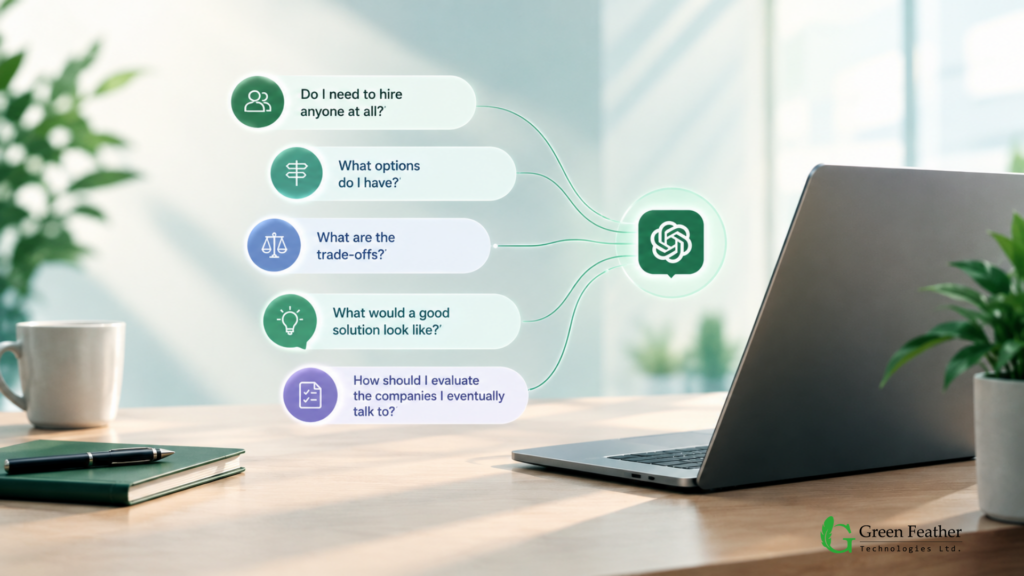
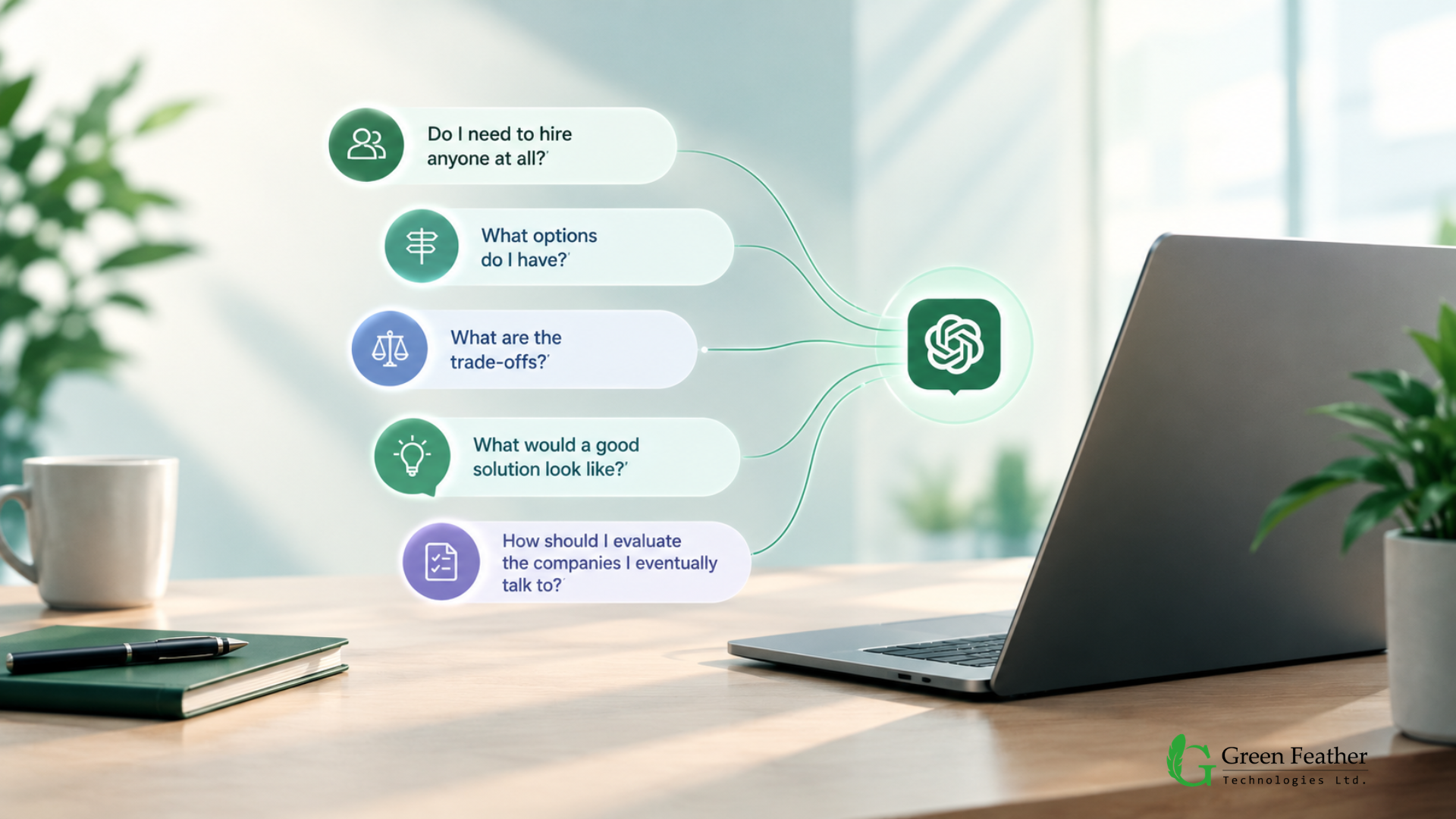
They may start by asking:
- “Do I need to hire anyone at all?”
- “What options do I have?”
- “What are the trade-offs?”
- “What would a good solution look like?”
- “How should I evaluate the companies I eventually talk to?”
That is a different kind of buying journey.
The Buying Journey Is Moving Upstream
The emerging model looks more like:
Problem → AI-assisted research → Understanding → Comparison → Shortlist → Sales conversation → Decision
The practical difference is where the company enters the process. In the traditional model, a business might meet the buyer relatively early, often when they begin searching for a solution. In the emerging model, much of the buyer’s framing may already be underway before the company appears.
The buyer may already have begun defining the problem, comparing approaches, forming expectations, and narrowing their options.
That means the first sales conversation can begin with a more informed buyer one who already has a working theory of the problem, an early sense of what “good” looks like, and a few options they’ve started to rule out.
The opportunity for a company, therefore, isn’t only to become visible when the buyer is ready to talk. It’s to become useful while the buyer is still deciding what the right answer is.
Earning Influence Before the Shortlist
This is the part businesses can easily miss. The competition isn’t only for the final “yes.” It’s for the questions that come before it: what the buyer thinks the problem actually is, what solutions they believe are available, what trade-offs they’re willing to make, and what a reliable provider looks like.
Those answers can shape the eventual purchase long before a sales representative enters the conversation, which means the real task isn’t producing better content. It’s helping buyers understand the operational decision itself: build or buy, hire or outsource, add headcount or fix a process. Get that part right, and the company doing the explaining is naturally positioned as the company worth talking to.
Content is simply the mechanism for doing that, not the goal in itself.
A page that says, “Why choose our customer support team?” is useful once someone has already decided to outsource. But it does little for the person still asking, “Should we outsource customer support in the first place?” That earlier question is where the real decision begins, and it’s also where a business has the most room to earn trust.
Why This Matters Most for Complex Decisions
This shift isn’t equally important everywhere. It matters most for decisions that aren’t simple commodity purchases where the buyer has to weigh trade-offs, not just compare prices.
For those decisions, the information a company provides can become part of the infrastructure buyers use to evaluate their options: helping someone understand a problem, define what they actually need to decide, compare internal and external options, and identify the risks worth worrying about.
Consider a few common operational decisions. A company exploring virtual assistants may first need to decide which work to delegate and which to keep internal. A business facing a growing support backlog may need to determine whether the real problem is headcount, process, coverage, or training. A company considering engineering staff augmentation may need to understand whether it has a capacity problem, a skills gap, or a delivery bottleneck before deciding how to solve it.
In each case, the buyer is making an operational decision before they’re making a provider decision. That’s where businesses can help.
What This Means for Businesses
Three shifts follow from this:
Answer the question before selling the service.
A prospect may not be searching for your service, yet they may still be trying to understand the problem. Meet them there, with content that addresses what comes before the search: when outsourcing makes sense, what signs suggest the current model isn’t working, what should stay in-house.
Build around decisions, not offerings.
“Why choose our virtual assistant service?” assumes the buyer has already picked the category. “When does hiring a virtual assistant make financial and operational sense?” doesn’t. Decision-oriented content stays useful even before someone has decided to buy.
Help buyers establish evaluation criteria.
Don’t just claim your solution is better; give buyers a way to define what “better” means. For an outsourced support team, that might be response-time expectations, escalation processes, and quality controls.
For staff augmentation, it might be role clarity, ramp-up time, and how success gets measured. A business that helps buyers build their own criteria becomes part of the decision without forcing it.
Where This Matters Most for GFT
GFT operates in exactly this territory: areas where buyers are deciding how part of their business should run.
Should we hire internally or use an external team? Should we build a customer-support function ourselves or work with a specialist? How many people do we actually need? What should we expect from an external team, and how should we measure performance?
These decisions require more than a sales pitch. They require clarity.
The opportunity for a company like GFT isn’t simply to make its services easier to find. It’s to make the decision easier to understand: when an operating model makes sense, what trade-offs it involves, what risks to consider, and what good execution looks like.
That’s a different kind of marketing. It’s also a different kind of trust.
Be Useful Earlier
AI doesn’t eliminate the sales conversation. It changes what happens before it.
When buyers use AI to understand problems, compare options, and set expectations, businesses can influence the decision earlier. The advantage won’t necessarily belong to the company with the most content. It will belong to the company that helps the buyer understand the decision best.
Be useful earlier.